A right of way is a legalized use of land for a specific purpose like utilities, sewers, roads, it can even include transporting materials over public or private road systems.
When it comes to construction projects, this land needs to be blocked, altered, or even ripped up in order for the project to be completed.
And that is where right of way construction surety bonds play a role.
When it comes to surety bonds, there are likely different requirements based on the project and location, but each shares the same overall purpose.
The 3 Types of Construction Bonds To Know
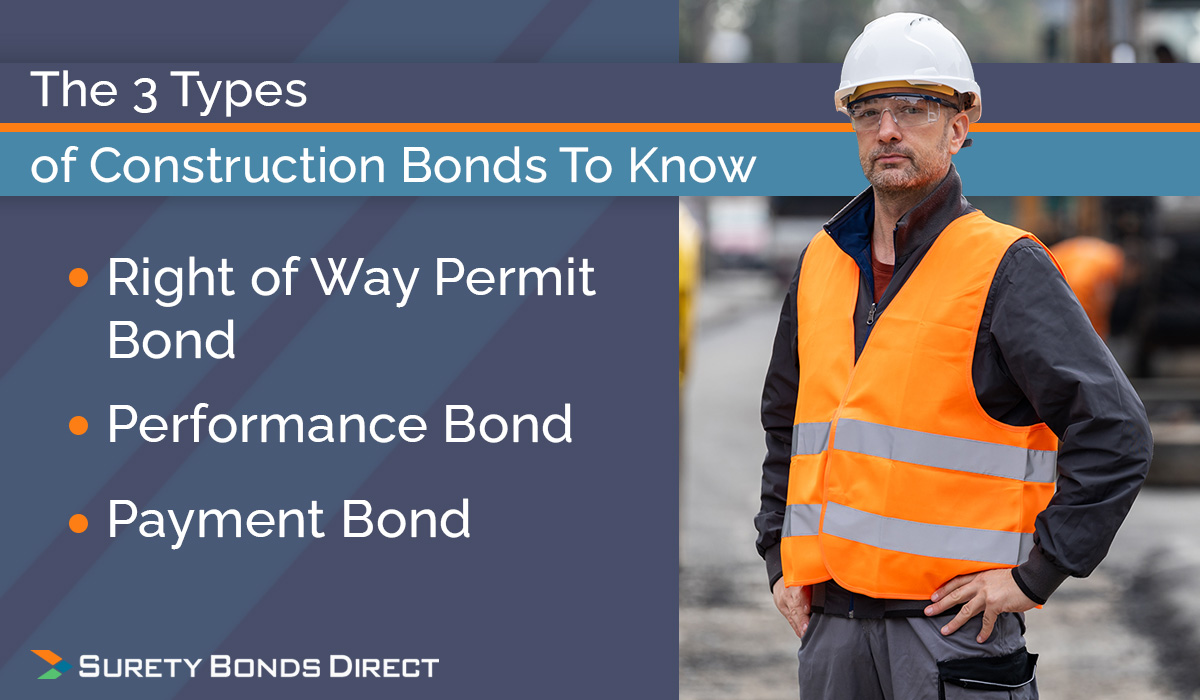
When it comes to construction projects that involve work on rights of way, there are three types of surety bonds to understand:
Right of Way Permit Bond
This is typically a smaller, set bond coverage amount that ensures the contractor will restore the public or private property back to its original state.
This is also called a right of way permit bond.
Performance Bond
The performance bond ensures the contractor will complete the project according to the contract's terms.
Payment Bond
The payment bond ensures the general contractor will pay subcontractors for the work they completed and not leave the project owner with unpaid subcontractors.
Here is how each of these affect the general contractor when performing projects that involve right of way construction work.
Government Owned Right of Way Projects
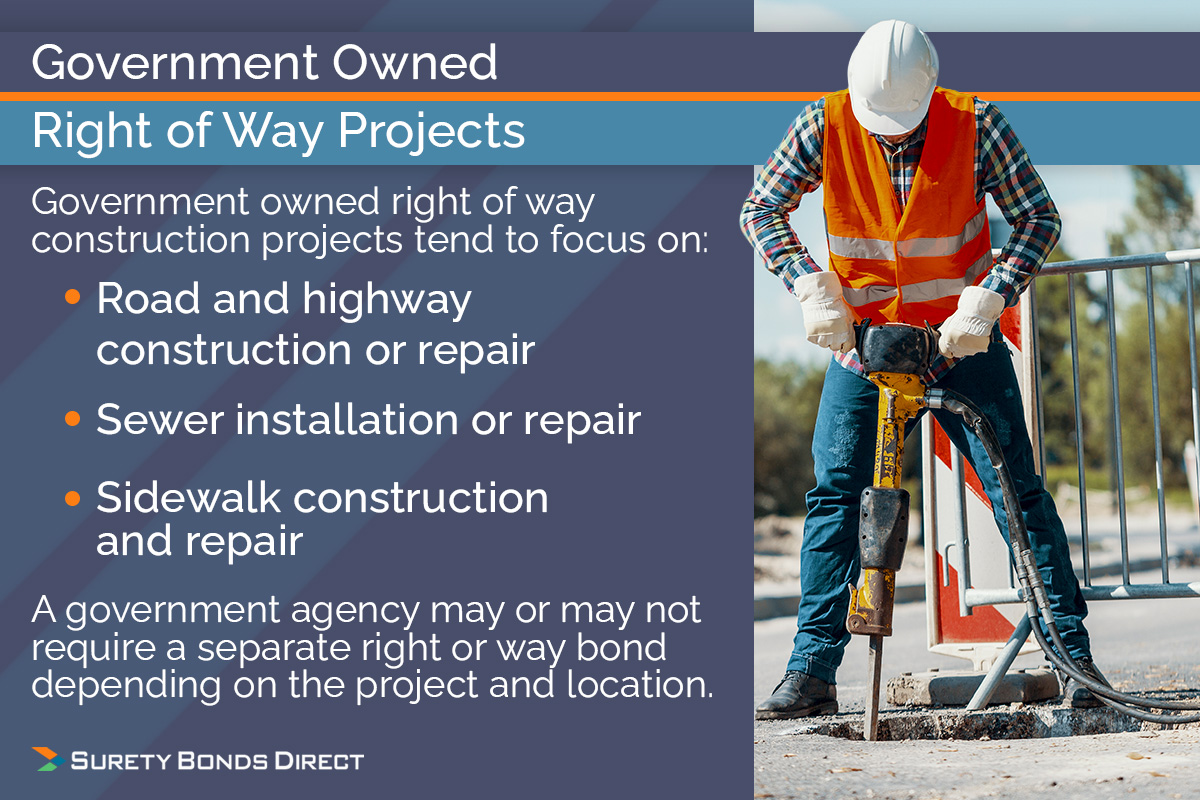
Government owned right of way projects tend to focus on:
- Road and highway construction or repair
- Sewer installation or repair
- Sidewalk construction and repair
When the government is performing work that requires public owned land to be temporarily destroyed or constructed, they will put each specific job out for bid.
The Federal government uses Sam.gov as the central location for jobs out for bid. And every state and city have their own portals where contractors can find and bid on jobs.
When a contractor wins a project, the government agency commissioning the project will require the contractor to secure the three bonds we've already discussed.
In many cases, because it's a government owned project, they may not require a separate right of way permit bond. But this is not always the case either. For example, Denver, Colorado requires all contractors who will perform work in the city limits to obtain a Denver right of way license.
Another example is the City of Forth Worth Texas right of way permit bond ranging from $10,000 to $25,000.
These projects will likely always require a performance and payment bond.
Privately Owned Right of Way Projects
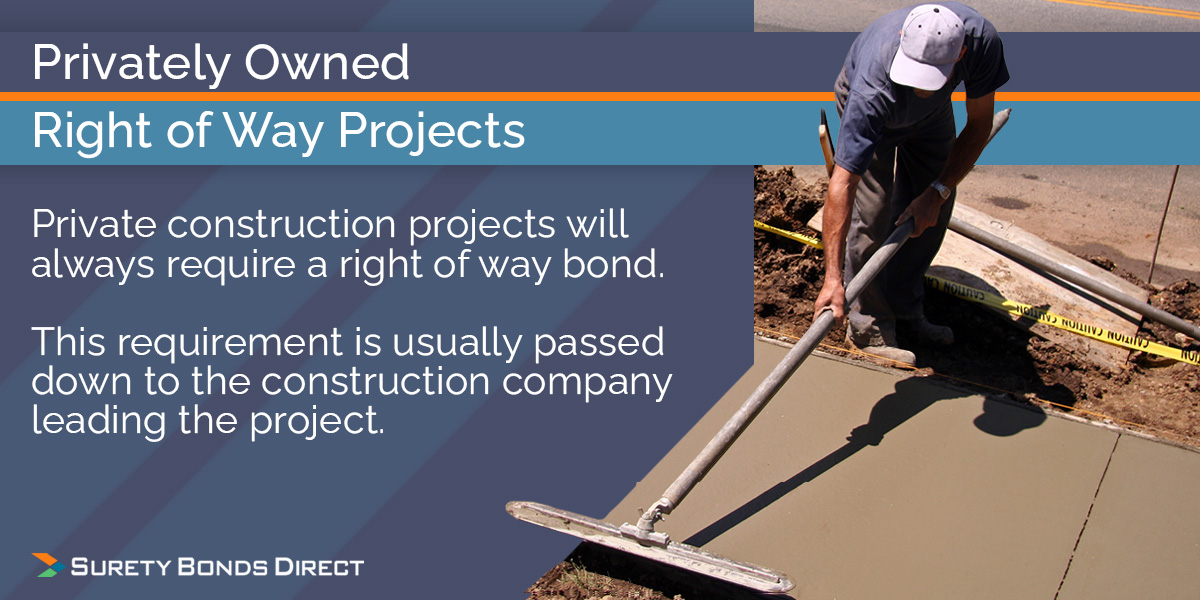
When a private company has to temporarily rip up public owned land, they will have to obtain a right of way permit bond.
They will likely pass down this requirement to the contracting firm they'll hire along with requiring the standard performance and payment surety bonds for the overall project itself.
Private companies like gas, electric, and telecommunications tend to have a blanket surety bond with the cities they operate in. This blanket bond serves the same purpose as the right of way bond. You just have to remember, these companies are constantly performing work that impedes public owned land.
What Are Common Right of Way Construction Projects?
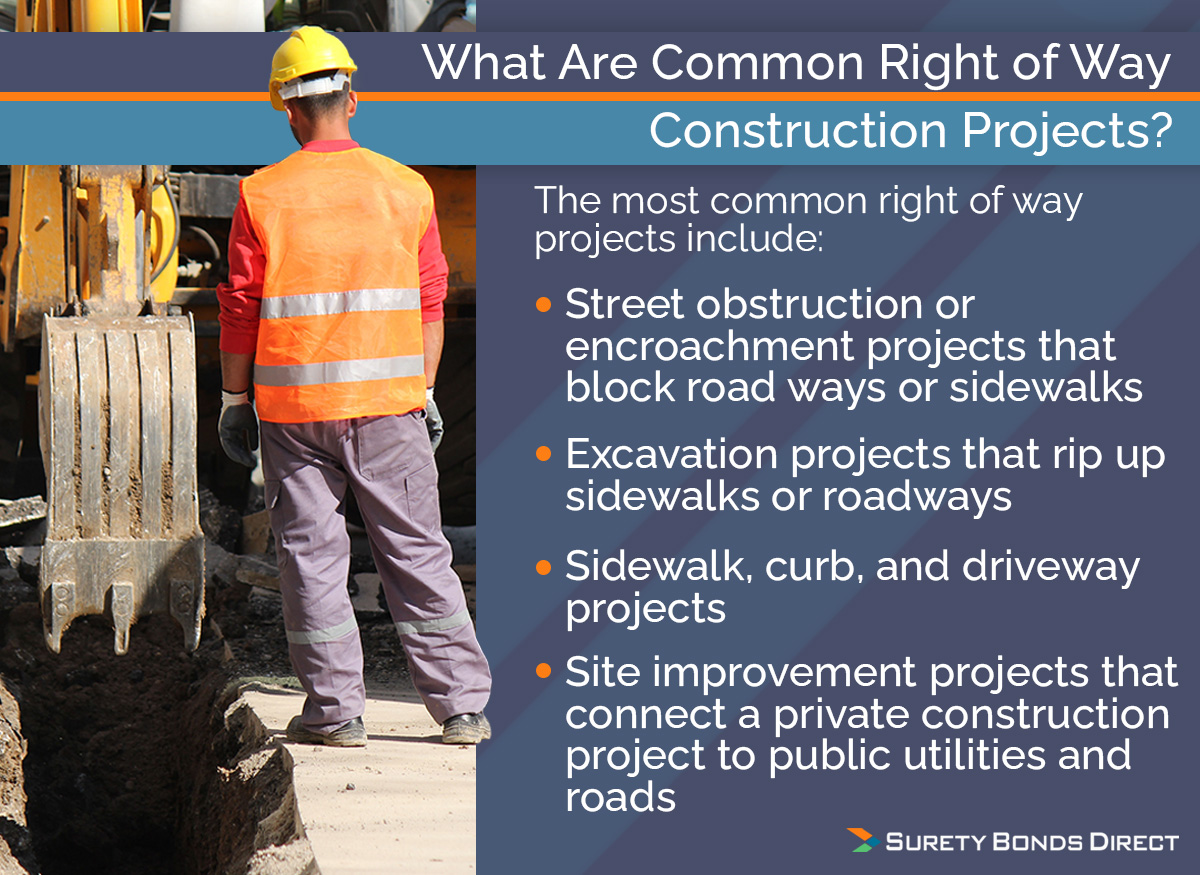
The most common right of way projects include:
- Street obstruction or encroachment projects that block road ways or sidewalks
- Excavation projects that rip up sidewalks or roadways
- Sidewalk, curb, and driveway projects
- Site improvement projects that connect a private construction project to public utilities and roads
- Oversize size and weight transportation projects for the transport of heavy and/or oversize equipment or product
Oversize and overweight permit is the outlier in this list. This has nothing directly to do with construction projects.
When a company needs to transport heavy machinery or maybe building material, it can be either over the legal size limit and/or the weight limit.
The government will require the company transporting the load to purchase an oversize/overweight permit bond in the event they damage the roads or surrounding areas while moving the load.
In this event, this permit bond will pay the city to hire a construction company to repair the damages, likely having its own bonding requirements.
When You Need Right of Way Construction Surety Bonds We're Here To Partner With You

Let's quickly recap...
If you bid and win a project that requires you to temporarily rip up public land to complete the project, you'll likely need to get a right of way surety bond.
This right of way bond ensures that the construction company will restore the public property back to its original state.
Along with the right of way permit bond the general contractor will get a performance and payment bond for the specific project they are completing.
These bonds ensure the project owner the job will be completed according to the contract and that all subcontractors will be paid for their work.
In the event the project owner is a government agency, they may or may not require the right of way permit bond. This will be determined on a project by project basis and location.
We are Surety Bonds Direct and we partner with construction companies to secure and manage the required surety bonds for their projects.
If you're actively bidding on projects, let us earn your business by securing the lowest pricing surety bonds you need for your projects. Besides just securing the bonds you need, we actively manage your bond portfolio so you never miss a renewal date and quickly obtain your bond discharge agreement on completed projects.
Complete an online quote request and tell us about your project or call a bond specialist today at 1-800-608-9950.