As an emerging construction company taking on larger projects you're probably being asked to provide WIP reports, or work in progress reports.
Typically these WIP reports are not required until you're in a construction surety bond program.
In this short post you'll learn:
- What is a construction bond program
- The role of WIP reports as you take on new jobs
- What numbers are the most important in these WIP reports
What Is A Construction Bond Program?

A construction bond program is when a construction company works with a surety bond producer to build and maintain an aggregate monetary amount of construction bond capacity.
In simple terms, your company would work with a construction bond producer like us (Surety Bonds Direct) and we would get you approved for $1 million dollars in available bond capacity.
This means you would essentially be pre-approved for the bid bonds, performance bonds, and the payment bonds you need to take on and complete projects.
Being pre-approved means you don't have to go through a credit check for every job, but it still means your projects need to means specific requirements like these examples:
- Distance from your home office
- Avoid large bid ratio figures
- Not rely on special environmental permits
Again, these are only examples.
How Does Aggregate Capacity Work?
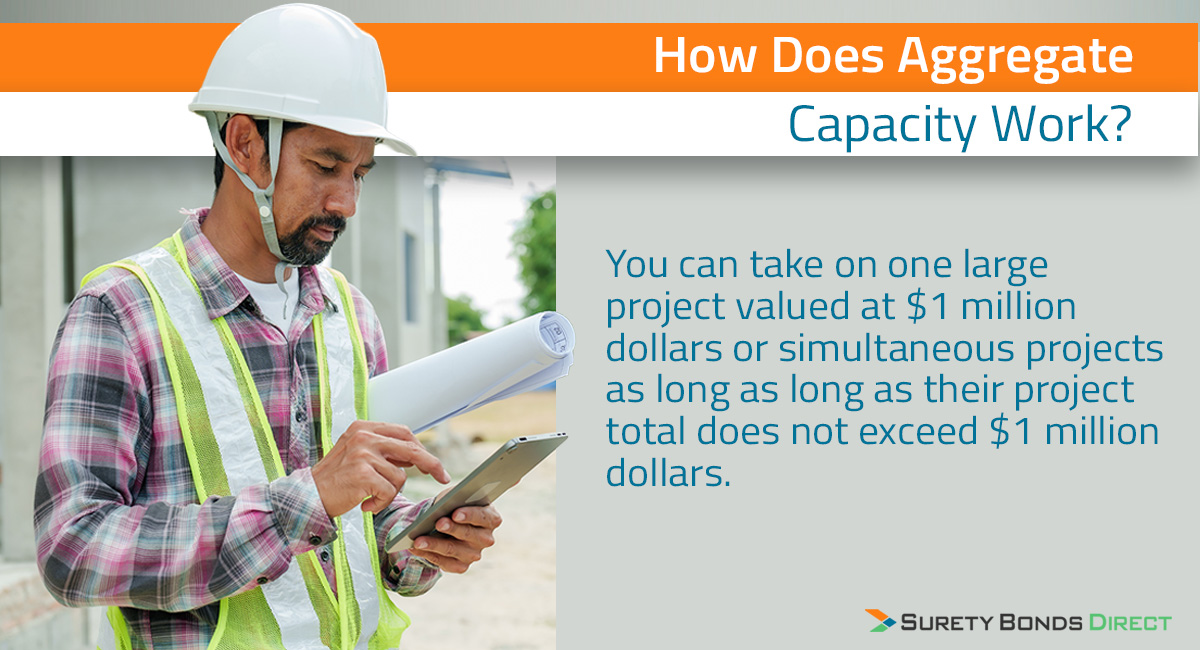
This aggregate capacity means you can take on one large project (as long as it gets approved) valued at $1 million dollars.
Or you can take on simultaneous projects as long as their project total does not exceed $1 million dollars.
We would help you manage these construction bonds and as you successfully complete projects, we'll help you increase the amount of bonds you have access to.
This is where WIP reports come in.
If you're interested in step one of building a construction bond program, fill out our quote form and tell us about your business or call a bond specialist at 1-800-608-9950.
We can get you approved for up to $3 million on bond capacity with nothing more than a personal credit check of business ownership.
What Is The Role Of The WIP Report?
A WIP (work in progress) report for most surety underwriters is nothing more than an Excel spreadsheet.
It highlights a snapshot of where your company is with current projects and your ability to bid on new projects.
For example you would be required to provide numbers like project:
- Current contract price including change orders
- Estimated cost to complete
- Estimated percent complete
- Revenue earned to date
- Billed to date
There are other numbers that all describe the financial state of each active project.
Together this gives snapshot:
- Of your business compared to your available bonding capacity
- The state of projects and how they're progressing compared to each other
- Any warning signs of potential cash flow issues
- Even delay issues resulting from hiring to equipment capacity
The underwriting surety wants to ensure each project and your business are on solid ground with your projects.
And it's not just to make sure you're not in any trouble.
It can also be used to encourage your growth if projects are moving along and you have available capacity, they and us are here to help you grow.
What Are The Most Important Numbers On The WIP Report?
Obviously this all starts with the job description.
The active projects must match what you've outlined in past reports unless they have been successfully completed.
Another really important factor to consider is this report needs to outline all active projects, even if they have no active construction surety bonds.
The reason all projects must be considered is any active project takes your team's man hours, equipment hours, management hours, and administration hours away from other projects.
Billed To Date Figure
When you compare the current project total to the billed to date you get a few insights like:
- How much money is coming in the near term (this is similar to accounts receivable)
- What your near term cash flows look like to keep your projects moving forward
Cost To Date Figure
This is what you've paid out of pocket to get the project to this stage.
Imagine for a moment your cost to date was considerably higher than your billed to date. This could indicate a coming cash flow crunch.
It can even signify a bad relationship with the project owner or administration shortcomings as an explanation why billings are not higher.
As you probably know, cash flow is the life blood of a project especially when taking on simultaneous projects.
Cost To Complete Figure
This number shows what is left to be paid to get the project done.
If the cost to complete is high compared to billed to date, this is another sign of potential cash flow issues.
This can also signify a rising cost in materials or a subcontractor.
Cost to date compared to cost to complete should give a good indicator of project completeness.
Current Backlog
Finally the last big number is the current backlog of all active projects. This is the cost to complete all active projects.
When you look at each project on an individual level compared to the total current backlog and your available capacity, you have a good snapshot of the health of your business.
This lets your bond producer know:
- Can you take on a new opportunity and succeed?
- Can you identify why bills for completed work are not getting out the door?
- Is project retainage potentially an issue?
- Are you getting your projects completed on a fast timeframe and it might be time to increase your overall capacity?
That's the role of the WIP reports.
It can seem like additional work when you're already so busy, but these reports support your growing business.
The goal isn't to find red flags, it's to identify when you can increase your bond capacity and start taking on more or larger projects.
How Do You Setup Your First Bond Program?

Obviously there is a lot of complexity in a construction project.
But nearly all larger construction projects start with your company's ability to get the surety bonds you need to bid and win the projects.
The stronger your bond history and capacity, the more confident and aggressive you can be when winning new projects.
Everything starts with your first bond program which would be getting approved for up to $3 million dollars in aggregate bond capacity.
Keep in mind this does not mean you need to choose $3 million dollars. Rather you can select a figure that matches your business size and goals. Maybe that's $500,000 to start or $1 million.
Click here and complete a quote request telling us about your business and the amount you're considering. You can also call a bond specialist at 1-800-608-9950.
We want to be your bond producer and help you grow a successful surety bond program which means bigger projects and a growing portfolio of completed projects.